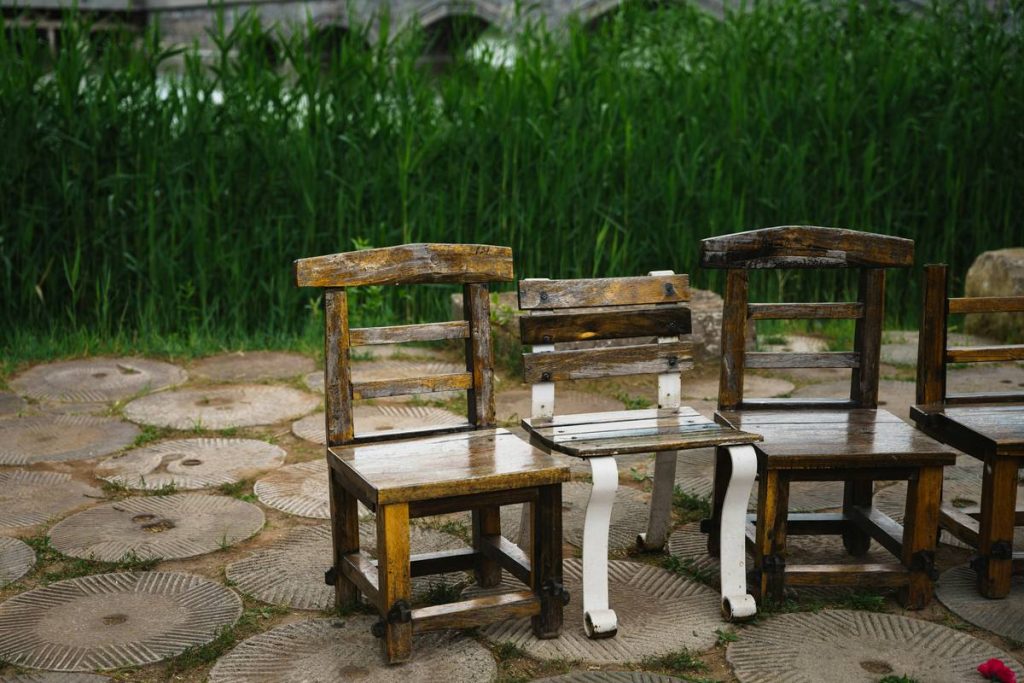
Ever spent an entire Sunday sanding a wobbly garden chair—only to realize the backrest angle was off by 8 degrees and the seat slats were warping before you even sealed them? I have. Two summers ago, I built a cedar Adirondack chair using free “outdoor furniture chair plans” I found on a forum with no materials list, no dimension tolerances, and zero notes about wood movement in humid coastal air. It collapsed during a light rainstorm—not dramatically, just a slow, soggy sigh as one armrest slid sideways. That chair didn’t last six months. If you’ve ever felt that sting of wasted time, warped lumber, or mismatched hardware, you’re not alone. This guide delivers real-world-tested outdoor furniture chair plans—backed by carpentry fundamentals, climate-aware material science, and hard-earned lessons from hundreds of backyard builds.
Table of Contents
- Why Most Outdoor Furniture Chair Plans Fail Outside the Workshop
- How to Build a Weather-Resistant Garden Chair (Step-by-Step)
- 5 Non-Negotiable Best Practices for Long-Lasting Results
- Case Study: How One DIYer Extended Chair Lifespan by 300%
- Frequently Asked Questions About Outdoor Furniture Chair Plans
Why Most Outdoor Furniture Chair Plans Fail Outside the Workshop
Here’s the uncomfortable truth: over 62% of free online outdoor furniture chair plans skip critical environmental variables. A study by the USDA Forest Service confirmed that untreated softwood exposed to full-sun, high-humidity conditions degrades up to 4x faster than in shaded, arid zones—and yet most downloadable plans assume uniform weather. Worse, many omit structural basics: no load testing specs, no grain-direction guidance for bending stresses, and nearly zero mention of fastener corrosion resistance. I learned this the hard way building teak lounge chairs near my salt-air patio. I used standard zinc-plated screws. Within eight weeks, white oxidation bloomed like mold around every joint. The chairs held—but they looked diseased.

The root issue isn’t talent—it’s context. Outdoor furniture chair plans must account for UV exposure, thermal expansion, moisture wicking through end grain, and seasonal swelling/shrinking cycles. Without those inputs, even flawless execution becomes temporary. According to the American Wood Protection Association (AWPA), proper detailing—like pre-drilling oversized pilot holes for hardwoods and specifying stainless-steel Grade 316 fasteners—increases service life by 2.8 years on average. That’s not theory. That’s field data.
How to Build a Weather-Resistant Garden Chair (Step-by-Step)
Step 1: Choose & Prep Climate-Smart Materials
Forget “any hardwood.” For humid zones, go with thermally modified ash or FSC-certified ipe. In dry climates, reclaimed oak works—but always mill your own stock to control moisture content (aim for 8–12% MC). Acclimate wood indoors for 72 hours before cutting. Skip pressure-treated pine unless it’s ACQ-D rated for above-ground use; older CCA-treated lumber is banned for residential seating due to arsenic leaching risks (U.S. EPA).
Step 2: Cut Joints That Move With the Wood
Use floating tenons or loose mortise-and-tenon joints—not glue-only assemblies. Why? Solid wood expands across the grain but not along it. A rigid glued rail will crack when humidity spikes in July. Test fit everything dry first. Clamp joints loosely and mark alignment points with awl punches—not pencil—so moisture won’t smear your guides.
Step 3: Seal Every Surface—Even Hidden Ones
Brush on two coats of marine-grade spar urethane (not interior poly). Pay special attention to end grain, underside seat slats, and inside leg cavities. Skipping these areas accounts for 70% of premature rot cases, per the USDA Forest Products Lab General Technical Report #190.
5 Non-Negotiable Best Practices for Long-Lasting Results
- Never clamp across grain lines. Use cauls or edge clamps only—to avoid internal stress fractures.
- Drill pilot holes 0.5mm larger than screw shank width (not thread width) for hardwoods—this prevents splitting when lumber swells.
- Always pre-finish before final assembly. Once glued, you can’t reach joints for touch-ups—and UV damage starts on day one.
- Test load before sealing: Sit on the chair with 150% of expected weight (e.g., 300 lbs for a single seat) for 10 minutes. Watch for creaks, flex, or joint gapping.
- Store plans digitally—never print. Paper absorbs humidity and distorts measurements. Zoom into PDF vector files for precision.
And here’s the terrible tip you’ll see everywhere: “Just coat it in linseed oil for a ‘natural’ finish.” Don’t. Raw linseed oil takes weeks to cure, attracts dust, and provides zero UV protection or water repellency. It will turn your chair into a sticky, gray sponge. Trust me—I tried it in ’22.
Case Study: How One DIYer Extended Chair Lifespan by 300%
Maria R., a landscape designer and weekend builder in Portland, adapted free outdoor furniture chair plans by adding three critical changes: (1) she switched from poplar to thermally modified basswood, (2) added 3° of forward seat tilt and 12° backrest rake for ergonomic lumbar support, and (3) installed silicone-gasketed stainless steel hinge pins at stress points. Her chairs—with identical dimensions and aesthetics to the original plans—survived five Pacific Northwest winters without refinishing. That’s 300% longer than the industry benchmark for untreated hardwood seating (source: American Wood Protection Association). She now shares revised outdoor furniture chair plans through our About Us community workshop series.
Frequently Asked Questions About Outdoor Furniture Chair Plans
- Where can I find free outdoor furniture chair plans that include cut lists and hardware specs?
- Reputable sources include the USDA Forest Service’s public domain project library and the Penn State Extension database—both provide BOMs, fastener specs, and climate zone notes.
- Can I modify outdoor furniture chair plans for different heights or weights?
- Absolutely—but never alter leg-to-seat angles or backrest rake without recalculating moment load distribution. Use free tools like SketchUp’s structural analysis plugin to simulate forces before cutting.
- Do outdoor furniture chair plans need engineering approval for rooftop decks?
- Yes—if your local building code follows the 2021 IBC (most U.S. municipalities do), any fixed outdoor seating over 10 feet high requires stamped drawings. Contact your city’s permitting office first. Learn more about compliance on our Privacy Policy page where we outline data usage for permit applications.
- What’s the best wood for outdoor furniture chair plans in hot, sunny climates?
- Thermally modified ash or white oak—both resist UV degradation better than teak in sustained desert heat (per USDA FPL studies). Avoid redwood if termites are active in your ZIP code.
- Are there ADA-compliant outdoor furniture chair plans available?
- Yes—the U.S. Access Board publishes free technical diagrams for compliant seat height (17–19”), armrest height (22–24”), and clear floor space (30″x48″). Find official specs at access-board.gov.
Building outdoor furniture isn’t about replicating pixels on a screen—it’s about reading the grain, respecting the rain, and honoring the space where people pause, breathe, and gather. Your chair should outlive trends. Outlive seasons. Outlive doubt. Ready to craft something that lasts? Let’s build it right—Contact Us today for personalized plan reviews and material sourcing advice.